

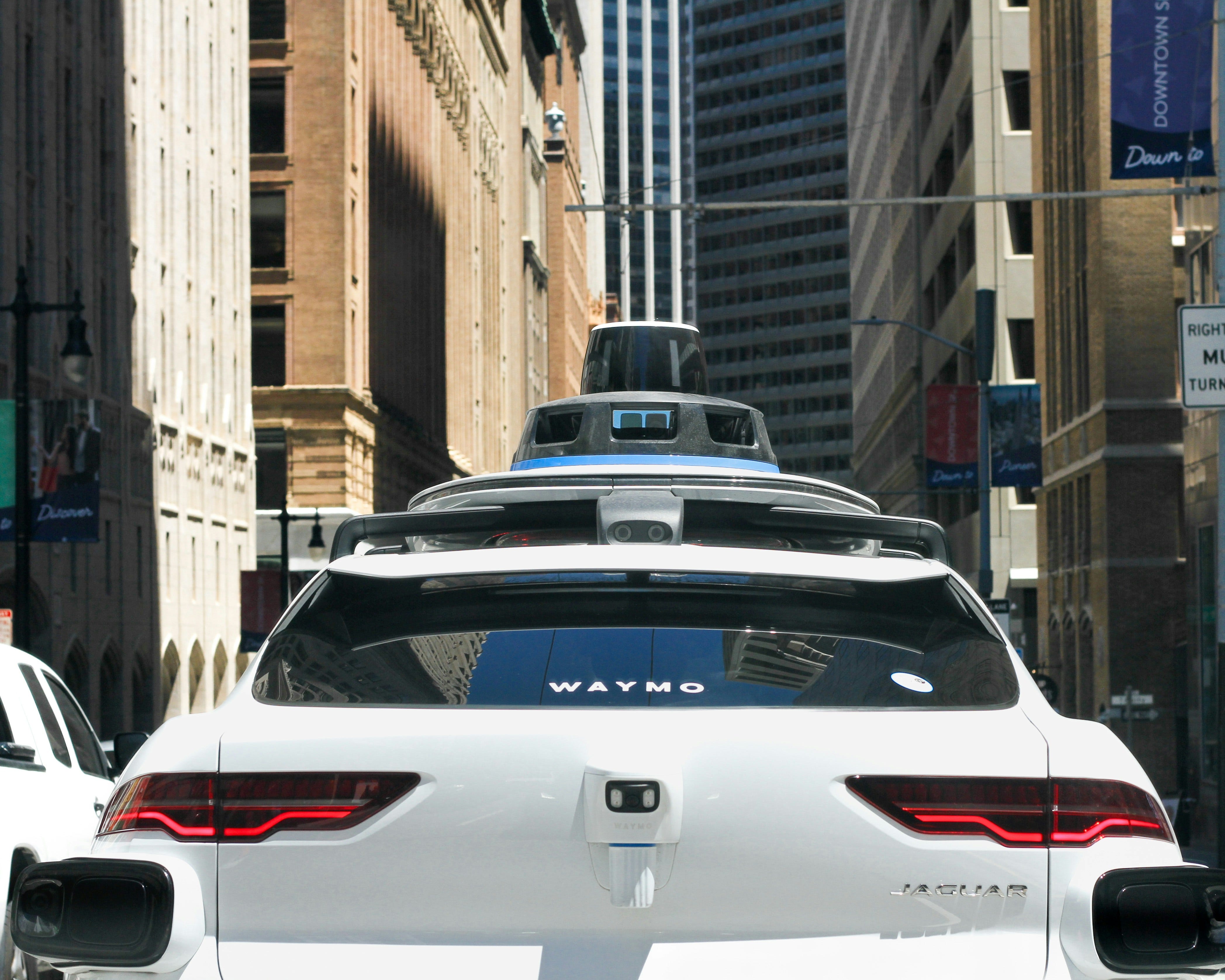
By late 2024, Waymo’s robotaxi fleet had logged more than 25 million fully autonomous public-road miles across the United States.[50] Yet a single accident in which an autonomous vehicle fails to predict or avoid a collision forces the legal system to confront its most consequential allocation problem: who bears responsibility when the dynamic driving task was performed not by a human but by software?[1] Autonomous vehicles do not create liability from nothing. They move the liability question from the driver’s conduct at the moment of impact to the design, deployment, monitoring and insurance of the system that performed the dynamic driving task. For over a century, legal frameworks governing road traffic anchored liability in human agency. The “driver” was the central locus of both control and responsibility.[1, 2] As the dynamic driving task (DDT) moves from human cognition to algorithms, the traditional negligence model is no longer sufficient on its own. It remains relevant, but it now operates alongside product liability, insurance-first compensation, safety-case regulation and data-based accident reconstruction.[2, 3, 4]
The emerging pattern is not the abolition of liability, but its redistribution. In Level 1 and Level 2 systems, liability remains substantially anchored in human supervision. At Levels 3 and 4, the legal analysis moves to the operational design domain, the handover or fallback architecture, the entity responsible for the automated driving system (ADS), the insurer-first compensation mechanism and the evidential record generated by the vehicle. The central question is no longer simply whether a driver was negligent, but whether the system was authorised, safely deployed, properly monitored, adequately updated and capable of proving what it did.[4, 5, 6]
Across the United States, the United Kingdom, Europe, Asia, and Australasia, regulators face the “pacing problem”: the inherent lag between technological innovation and legal frameworks that can regulate it.[7] Some jurisdictions have adopted “light-touch” guiding principles to foster innovation. Others have enacted proactive statutes that redefine the nature of vehicle operation and insurance.[7, 8, 9, 10] This analysis examines these diverging and converging frameworks, focusing on the mechanisms of liability, the role of data in accident reconstruction, and the evolution of motor insurance in an era of automated mobility.
The Hierarchical Framework of Automation and Legal Agency
Central to liability analysis is the taxonomy of driving automation established by the Society of Automotive Engineers (SAE). The SAE defines six levels ranging from no automation (Level 0) to full automation (Level 5).[11, 12, 13] SAE levels are not liability rules. They are the technical vocabulary through which statutes, insurers and courts decide whether the human, the ADS, the operator or the product supplier was responsible for the relevant part of the driving task.[5]
Classification of Driving Automation and Liability Thresholds
Most consumer vehicles currently available in ordinary use remain Level 1 or Level 2 driver-assistance systems, with the human driver responsible for monitoring and control.[11] The liability frontier lies in Level 3 and Level 4 systems, where the ADS may perform the dynamic driving task within an operational design domain (ODD). In these systems, the human may still be required to act as a “fallback-ready user” or “user-in-charge”.[14, 16, 17]
This transitional phase introduces a zone of legal ambiguity, particularly when the system requests the human to resume control. The determination of whether a human had a “reasonable time” to react to such a demand will be central to future litigation.[14, 18] Courts will have to define the temporal and cognitive boundaries of human transition readiness - a question with little direct precedent in conventional traffic law.
The United States: A Laboratory of Jurisdictional Patchworks
In the United States, the regulatory environment reflects a distinctive tension between federal safety authority and state-level statutory experimentation.[19, 20] To date, no comprehensive federal statute governs autonomous vehicle civil liability. The definition of a vehicle “operator” varies sharply across state lines.[20]
Federal Safety Authority and the Standing General Order
At federal level, the United States regulates autonomous vehicles (AVs) primarily through vehicle safety authority rather than a unified civil-liability statute. The National Highway Traffic Safety Administration’s (NHTSA) Standing General Order requires identified manufacturers and operators to report certain crashes involving ADS or Level 2 advanced driver-assistance system (ADAS) vehicles. The agency uses that data to identify safety concerns, investigate potential defects and, where necessary, require unsafe vehicles or equipment to be remedied.[11, 19, 20, 44]
Federal Motor Vehicle Safety Standards (FMVSS) were originally designed for vehicles with human controls. Manufacturers seeking to test vehicles without steering wheels or brake pedals must often request exemptions.[19, 20] Federal preemption (where federal law would override inconsistent state laws) remains unresolved. Current and earlier versions of the SELF DRIVE Act, most recently reintroduced by Representative Bob Latta in February 2026, have yet to clarify this jurisdictional boundary.[19]
State Statutory Innovation: California, Florida, and Arizona
As of late 2024, more than 35 states have enacted legislation or executive orders related to autonomous vehicles.[19, 20] These statutes represent the front line of legal evolution, with states adopting markedly different philosophies on liability and operator responsibility.
California has established one of the world’s most rigorous regulatory frameworks. Vehicle Code Sections 38750 through 38755 govern testing and deployment.[18, 21] Manufacturers must obtain specific permits and maintain $5 million in insurance or proof of self-insurance.[21, 22] California’s 2026 AV regulations, announced by the DMV on 28 April 2026, introduce a “Notice of AV Noncompliance” mechanism. Contemporary reporting indicates that, from 1 July 2026, law enforcement will be able to issue notices for driverless-vehicle traffic violations, triggering DMV investigation and potential permit consequences.[45, 49]
Florida adopted a contrasting approach intended to attract manufacturers.[19] Florida’s House Bill 311 (2019) explicitly designates the ADS itself as the “operator” when engaged. This decouples liability from human presence.[19] The law permits operation of vehicles without a licensed human occupant, provided the vehicle meets federal safety standards.[19] By legally designating the system as the operator, Florida created a statutory path for shifting liability from individuals to technology-deploying entities.[19]
Arizona’s framework is driven primarily by executive orders, particularly Executive Order 2018-04, which mandates that all automated driving systems comply with federal and state safety standards.[19] Arizona has positioned itself as a “test bed” for innovation. It established a designated oversight committee and requires companies to register their intended ODD.[19]
The Evolution of Tort and Product Liability in US Case Law
In the absence of a unified federal liability statute, US courts apply traditional tort principles and product liability theories to autonomous vehicle accidents.[4] A visible shift has occurred: from “driver error” as a cause of action to “design defect” or “failure to warn”.[6] In cases involving semi-autonomous systems like Tesla’s Autopilot, plaintiffs have successfully argued that manufacturers bear liability for systems that fail to monitor driver engagement adequately or that encourage foreseeable misuse. In Benavides v Tesla, Judge Beth Bloom denied Tesla’s post-trial motion after a jury award of $242.57 million, including $200 million in punitive damages, in a defective-design and product-liability case concerning Autopilot.[6, 46]
As vehicles reach Levels 4 and 5, claims are likely to be framed increasingly through product-liability concepts, treating the ADS not as a legal driver but as part of a product and service system whose design, warnings, updates and operational limits can be tested in litigation.[6]
Negligent entrustment and related owner-responsibility theories may also evolve where owners or operators fail to maintain software updates, sensors or calibration requirements.[6]
The United Kingdom: A Proactive Statutory Model
Westminster has positioned itself as a global leader in autonomous vehicle regulation through the Automated and Electric Vehicles Act 2018 (AEVA) and the subsequent Automated Vehicles Act 2024.[10, 24] Its approach is distinctly proactive, seeking to resolve “regulatory disconnection” before mass commercialisation of self-driving technology.[7]
The Automated and Electric Vehicles Act 2018: The “Insurer-First” Model
AEVA 2018 introduced a novel insurance and liability model for connected and autonomous vehicles (CAV).[7] It resolves the question of “who is liable” by establishing a “single insurance” policy covering both driver and vehicle.[7]
Under the AEVA 2018, if an accident is caused by an automated vehicle “driving itself,” the insurer is primarily liable to compensate any third party who suffers damage, including the “driver” who may be an occupant not actively driving.[7, 25] This first-instance insurer liability ensures swift compensation. The injured party need not identify or prove a specific software or sensor failure before recovering.[14]
Once the insurer has compensated the victim, the Act provides a statutory right of recourse. The insurer can recover costs from the party responsible for the accident, such as the vehicle manufacturer or a third-party software provider.[7, 14] This two-stage process protects consumers while holding technology providers accountable through insurance subrogation.[7]
The Automated Vehicles Act 2024 and the ASDE
Building on a four-year review by the Law Commission of England and Wales and the Scottish Law Commission, the Automated Vehicles Act 2024 established a framework for safe deployment of self-driving vehicles on British roads.[10, 24] The legislation introduces key legal roles and responsibilities that redefine the boundaries of liability.
A “bright line” distinction runs through the 2024 Act: driver support features on one side, self-driving systems on the other.[24] When a vehicle is authorised as “self-driving” and the ADS is engaged, the human “user-in-charge” is explicitly exempted from criminal responsibility for the dynamic driving task.[24] This marks a turning point in road traffic law. It removes the traditional burden of “care and control” from the human occupant and places responsibility for the way the authorised self-driving feature drives, for regulatory purposes, on the Authorised Self-Driving Entity (ASDE), while third-party compensation remains channelled primarily through the AEVA 2018 insurer-first model.[14, 24] However, the user-in-charge remains responsible for “non-driving” tasks such as ensuring the vehicle is insured and that passengers wear seatbelts.[14]
Both Law Commissions recommended that ASDEs disclose safety-relevant data to regulators and insurers.[14] This duty of transparency is intended to ensure that civil claims are decided fairly and that systemic risks are identified and mitigated before they cause further accidents.[14]
Continental Europe: Harmonising AI and Product Liability
Across the EU, autonomous vehicle liability is being reshaped by a broader initiative to update the legal framework for the digital age. Key drivers include modernisation of product liability law and regulation of artificial intelligence.[26, 27, 28]
The Revised Product Liability Directive (EU) 2024/2853
The most consequential development in European liability law is the revision of the Product Liability Directive (PLD), which came into force on 8 December 2024. Member States have until 9 December 2026 to transpose it; the old PLD continues for products placed on the market or put into service before then.[27] Once implemented, the new directive expressly brings software, including AI systems and related digital services, within the strict product-liability framework, whether embedded in a device or accessed via cloud services.[26, 27, 28]
Key innovations of the revised PLD include several changes that reshape liability across the product lifecycle. Software is now treated as a product and manufacturers of AI systems and digital components are liable for defects in software, including those arising from algorithmic errors or data quality issues.[6, 26] Lifecycle liability has expanded beyond the moment a product is “placed on the market.” Manufacturers who retain control through software updates or digital services remain liable for defects that arise after the product enters service.[28, 29] Providers of “connected digital services” that are essential for vehicle function (such as real-time navigation or mapping services) can be held jointly and severally liable alongside the vehicle manufacturer.[26, 29] Any entity that substantially modifies a product becomes liable as a “manufacturer” for the modified components.[26, 28, 29]
The directive also addresses information asymmetry by alleviating the burden of proof for victims.[27, 28] Given the limited explainability of AI, courts are now empowered to order disclosure of technical evidence.[28] If a manufacturer fails to comply with a disclosure order, the defectiveness of the product is presumed.[28] If technical complexity makes it excessively difficult for a claimant to prove a defect, the claimant only needs to show that it is likely the product was defective or that a causal link exists.[28]
Germany: The StVG Amendments and the Technical Supervisor
Germany, as Europe’s leading automotive manufacturer, implemented specific domestic laws to support Level 3 and Level 4 automation.[16, 30] The German Road Traffic Act (StVG) was amended in 2017 to allow conditionally automated driving and further amended in 2021 to create a framework for autonomous driving without a driver present.[16, 30]
A unique feature of the German framework is the “Technical Supervisor” (Technische Aufsicht).[12, 16] For Level 4 vehicles, while no driver is required on board, a natural person must monitor the vehicle externally. That person must be capable of deactivating it or authorising specific manoeuvres if the system encounters an error.[12, 16] The Technical Supervisor is not treated as the driver, but may be exposed under general tort principles if their monitoring or intervention falls below the required standard.[16]
Germany maintains a strict “holder” liability system, but with increased caps.[16] The maximum liability for the “vehicle holder” (usually the owner) in accidents involving automated systems has doubled to €10 million for personal injury and €2 million for property damage.[16] This ensures victims have access to substantial compensation through the owner’s mandatory insurance. The insurer retains a right of recourse against the manufacturer if a product defect is identified.[16]
The EU AI Act and Its Interplay with Liability
Many AI systems used in automated driving will be treated as high-risk under the EU AI Act (Regulation (EU) 2024/1689) where they are safety components of vehicles or vehicle systems subject to EU type-approval or conformity assessment.[6, 28] The AI Act is not itself a civil-liability statute, but its duties on risk management, data governance, transparency, logging, human oversight, robustness and cybersecurity may inform the applicable standard of care. Non-compliance may therefore become relevant evidence, although claimants will still need to establish the elements of the civil claim under national law.[6, 28]
Asia: State-Led Coordination and the Supervisory Model
Asia has emerged as a high-growth region for autonomous vehicles. China, Japan, and South Korea have each adopted state-led strategies that prioritise safety assurance and commercial deployment.[31, 32]
China: Shenzhen’s Milestone and National Taxonomy
China does not yet have a comprehensive national AV liability regime. General tort, product liability, transportation accident liability and insurance rules remain the baseline nationally.[32] The national standard for the classification of driving automation (GB/T 40429-2021) aligns closely with SAE levels and the “Safety Guideline for the Use of Autonomous Vehicles in Transportation Services” (2023) establishes the groundwork for commercialisation, but specific liability allocation remains a matter of local regulation and general law.[32]
Shenzhen’s 2022 “Regulations on the Administration of Intelligent and Connected Vehicles” provided the first concrete local rules for intelligent and connected vehicle (ICV) management.[3] The Shenzhen regulations clarify responsibility at different automation levels. For vehicles with a driver, the driver remains primarily responsible for traffic violations.[3] For driverless ICVs, the owner or user is responsible, but they have a clear right of recourse against the manufacturer if a system defect caused the accident.[3] This model shifts risk from vehicle damage and third-party liability to product and operational liability.[3]
Japan: Specified Automated Operation and the 2027 Roadmap
Japan’s policy roadmap targets Level 4 deployment on public roads nationwide by 2027, though this remains a stated ambition rather than a legislated deadline.[31] To support this ambition, Japan amended its Road Traffic Act in 2022 to define “Specified Automated Operation” (SAO).[34] SAO is legally separated from “driving,” allowing for driverless transportation services under strict permission systems.[34, 35]
Under Japanese law, the “SAO implementer” must obtain permission from the Prefectural Public Safety Commission and appoint an “SAO Supervisor”.[34] This supervisor is responsible for remote monitoring and must ensure that a person is sent to the scene of any accident to take necessary measures.[34] Japan’s approach maintains a hierarchical attribution framework where liability is distributed based on the negligence level of involved parties. However, increasing emphasis falls on the manufacturer’s responsibility for cybersecurity and system integrity.[2, 35]
South Korea: The Accident Investigation Committee
South Korea enacted the “Act on Promotion and Support of Commercialization of Autonomous Vehicles” (AVA) to create a supportive environment for the industry.[36, 37] Like the UK, South Korea amended its “Act on Guarantee of Automobile Accident Compensation” in 2020 to ensure that victims are first covered by the vehicle owner’s insurance.[35, 37]
A key feature of the South Korean system is the “Accident Investigation Committee” under the Ministry of Land, Infrastructure and Transport (MOLIT).[36] This committee is responsible for collecting and analysing data from the vehicle’s mandatory “autonomous driving information recording device” (DSSAD) to identify the technical cause of an accident.[36] This government-led investigation process is designed to provide swift relief to victims and provide an objective basis for the insurer’s subrogation claims against manufacturers.[36] In April 2026, Korea launched an Autonomous Vehicle Accident Liability Task Force to develop standards for accident responsibility and compensation procedures ahead of broader commercialisation.[48]
Australasia: Pragmatic Harmonisation and Safety Duties
Australia and New Zealand have approached autonomous vehicle liability through the lens of national harmonisation and adaptation of existing transport laws.[39, 47]
Australia: The National Automated Vehicle Safety Law (AVSL)
The Australian National Transport Commission (NTC) has led a programme to develop an “end-to-end” regulatory framework.[39, 47] In 2022, infrastructure and transport ministers agreed to develop a National Automated Vehicle Safety Law (AVSL). Current laws do not yet allow automated vehicles on public roads in the manner contemplated and the AVSL remains under development as part of a nationally consistent framework.[39, 47]
The primary subject of regulation under the proposed AVSL is the “Automated Driving System Entity” (ADSE), the corporation that assumes responsibility for the ADS.[39, 47] Australian ministers have reached consensus that the ADSE would be “legally in control” of the vehicle when the ADS is operating.[39, 47] The developing AVSL will enforce a “General Safety Duty” on ADSEs, requiring them to manage in-service safety risks “so far as is reasonably practicable”.[40] This approach moves away from a pure fault-based model toward a “safety assurance” model. The entity must prove it has followed best practices in development and deployment.[40]
New Zealand: The “Technology-Taker” Strategy
New Zealand has historically adopted a more observational stance, describing itself as a “taker of technology” that evaluates the success of other jurisdictions before committing to its own regulations.[13, 41] However, the Ministry of Transport has initiated a work programme to clarify where responsibility sits across the SAE levels.[13]
A primary concern in New Zealand is that current offence provisions are directed almost entirely toward human drivers.[13] The Ministry is exploring whether to adapt existing regulations or create a “bespoke set” for intelligent transport systems.[9] New Zealand is reviewing vehicle inspection settings, including the treatment of safety technologies, but its AV liability framework remains at work-programme rather than enacted comprehensive-regime stage.[41]
Cross-Cutting Determinants of Liability: Data and Insurance
Regardless of jurisdiction, the practical adjudication of autonomous vehicle accidents depends on two factors: the availability of high-fidelity data and the evolution of motor insurance products.
Data Storage: EDR vs. DSSAD
Regulators are mandating specialised data recorders to resolve the “black box” problem of AI decision-making.[42]
Event Data Recorders (EDR) and Data Storage Systems for Automated Driving (DSSAD) serve different evidentiary purposes. EDR provides the “how” of a crash: speed, braking, g-forces. DSSAD provides the “who”: was the system engaged, did it issue a transition demand, was the driver attentive.[42] Jurisdictions including California and South Korea have already mandated these systems as a precondition for deployment.[18, 42]
The Insurance Pivot: From Frequency to Severity
The insurance industry, led by global insurers such as Allianz, is recalibrating its models for the “new mobility era”.[43] Industry consensus holds that while accident frequency will decline substantially (potentially by 35 percent by 2040), the severity and cost of each claim will increase.[43]
This shift is driven by multiple factors. Technological complexity means that a minor bumper impact that once cost €500 to repair now involves replacement and recalibration of expensive light detection and ranging (LiDAR) and radar units, driving repair costs higher.[43] Product liability has shifted. Insurers are moving from insuring “human error” to insuring “system performance,” which requires closer collaboration with original equipment manufacturers (OEMs).[43] Cyber risk is emerging as a new underwriting category. New products are being designed to cover emerging threats such as software failures and cyberattacks that could lead to mass-collision events.[43]
Conclusion: The Path Toward Global Synthesis
The global review of autonomous vehicle liability reveals not the abolition of traditional doctrine, but its layering. Liability is being reallocated through insurance-first compensation, product liability, safety duties and data obligations. In place of the individual driver as the sole bearer of liability, a composite model is emerging where the manufacturer, the software developer and the fleet operator each bear responsibility calibrated to their role in the system.
The United States continues to rely on state-level statutory experimentation and judicial evolution. The United Kingdom and South Korea have provided a blueprint for “victim-first” insurance models that prioritise social stability over immediate fault-finding. The European Union has redefined the concept of a “product” itself to ensure that software is no longer a legal shield for manufacturers.
The successful deployment of autonomous vehicles will ultimately depend on “trust through accountability”.[43] For this trust to be realised, legal frameworks must ensure three outcomes: data access remains unrestricted for accident investigation, insurance models are sufficient to cover systemic failures and the “bright line” between human and machine control remains unambiguous.
As we approach 2030, the convergence of international standards will likely form a new “Lex Automatica”: a global body of law that balances the immense safety potential of automation with the enduring legal requirement for justice and compensation.
References
1 Navigating Liability in the Age of Autonomous Vehicles, https://www.wshblaw.com/experience-navigating-liability-in-the-age-of-autonomous-vehicles
2 Liability for Autonomous Vehicle Torts: Who Should Be Held Responsible? - MDPI, https://www.mdpi.com/2032-6653/16/12/665
3 Urban Transport of China Legislation of Intelligent Connected Vehicles Management and Innovative Practice in Shenzhen, https://www.chinautc.com/upload/accessorychinautc/20243/20243271415151704641.pdf
4 Comparing Tort Liability Frameworks in Autonomous Vehicle Accident Governance, https://www.researchgate.net/publication/399538965_Comparing_Tort_Liability_Frameworks_in_Autonomous_Vehicle_Accident_Governance
5 Comparing Tort Liability Frameworks in Autonomous Vehicle Accident Governance - MDPI, https://www.mdpi.com/2032-6653/17/1/32
6 Who’s Liable When AI Takes the Wheel? New Frontiers - Jones Day, https://www.jonesday.com/-/media/files/publications/2025/10/civil-liability-and-risk-mitigation-strategies-for-autonomous-vehicles/files/who-is-liable-when-ai-takes-the-wheel-white-paper/fileattachment/who-is-liable-when-ai-takes-the-wheel-white-paper.pdf?rev=c3f3cde57338496d9c5015c13e586480
7 Automated and Electric Vehicles Act 2018: An Evaluation in light of Proactive Law and Regulatory Disconnect, https://ejlt.org/index.php/ejlt/article/view/702/966
8 Regulation 2025, https://www.transport.govt.nz/assets/Uploads/Report/Reg-2025-Scenarios-and-Findings.pdf
9 Regulation 2025 - Emerging insights, https://www.transport.govt.nz/assets/Uploads/Report/Regulation-2025-Emerging-Insights.pdf
10 Automated and Electric Vehicles Act 2018 regulatory report July 2023 – December 2024 - GOV.UK, https://assets.publishing.service.gov.uk/media/67cf248ed38a67eb3afaa669/automated-and-electric-vehicles-act-2018-regulatory-report-july-2023_december-2024.pdf
11 Automated Vehicle Safety - NHTSA, https://www.nhtsa.gov/vehicle-safety/automated-vehicles-safety
12 Automated and Autonomous Driving. Legal Framework. - Mercedes-Benz Group, https://group.mercedes-benz.com/technology/autonomous-driving/driving/legal-framework.html
13 Automated Vehicles Work Programme - Ministry of Transport, https://www.transport.govt.nz/area-of-interest/technology-and-innovation/autonomous-vehicles-work-programme
14 Automated vehicles – Law Commissions drive forward regulatory..., https://www.dlapiper.com/insights/publications/2022/02/automated-vehicles-law-commissions
15 LIABILITY FOR DAMAGES CAUSED BY AUTONOMOUS DRIVING VEHICLES FROM THE EU LAW PERSPECTIVE, https://ojs.srce.hr/eclic/article/download/38091/18173/165820
16 Expert Guide: Autonomous Vehicles Law in Germany - CMS, https://cms.law/en/int/expert-guides/cms-expert-guide-to-autonomous-vehicles-avs/germany
17 Autonomous Vehicles - Ministry of Transport, https://www.transport.govt.nz/assets/Uploads/Ministry-of-Transport-AVs-background-paper-two-International-Developments.pdf
18 California Code, Vehicle Code - VEH § 38750 - Codes - FindLaw, https://codes.findlaw.com/ca/vehicle-code/veh-sect-38750/
19 Autonomous Vehicles | Self-Driving Vehicles Enacted Legislation, https://www.ncsl.org/transportation/autonomous-vehicles
20 The Current State of Self-Driving Car Regulations in the U.S. - Urban SDK, https://www.urbansdk.com/resources/the-current-state-of-self-driving-car-regulations-in-the-u-s
21 Autonomous vehicles law and regulation in California, United States - CMS, https://cms.law/en/int/expert-guides/cms-expert-guide-to-autonomous-vehicles-avs/california-united-united-united
22 Title 13, Division 1, Chapter 1 Article 3.7 – Testing of Autonomous Vehicles § 227.00. Purpose. (a) The regulations in this a - California DMV, https://www.dmv.ca.gov/portal/uploads/2020/06/Adopted-Regulatory-Text-2019.pdf
23 California’s Autonomous Vehicle Noncompliance Notices: A Defense Strategy Guide for Manufacturers - Bulldog Law, https://www.thebulldog.law/california-s-autonomous-vehicle-noncompliance-notices
24 Automated vehicles - Law Commission, https://lawcom.gov.uk/project/automated-vehicles/
25 Automated and Electric Vehicles Act 2018 - Legislation.gov.uk, https://www.legislation.gov.uk/ukpga/2018/18
26 New German Product Liability Regime: Broader Scope, Potentially Higher Exposure, https://www.gtlaw.com/en/insights/2026/1/new-german-product-liability-regime-broader-scope-potentially-higher-exposure
27 Liability for defective products - European Commission, https://single-market-economy.ec.europa.eu/single-market/goods/free-movement-sectors/liability-defective-products_en
28 Navigating product liability in high-security sectors: Addressing AI ..., https://www.whitecase.com/insight-alert/navigating-product-liability-high-security-sectors-addressing-ai-driven-risks-under
29 Germany: Update On Product Liability Law | A&O Shearman - JDSupra, https://www.jdsupra.com/legalnews/germany-update-on-product-liability-law-8120247/
30 Legal framework for automated and autonomous driving and teledriving in the EU and Germany - Taylor Wessing, https://www.taylorwessing.com/en/insights-and-events/insights/2026/02/legal-frameworks-for-autonomous-driving-and-teledriving
31 Regulations for Autonomous Vehicles: Where Do Countries Stand in 2024-2030? (Global Policy Trends) | PatentPC, https://patentpc.com/blog/regulations-for-autonomous-vehicles-where-do-countries-stand-in-2024-2030-global-policy-trends
32 Expert Guide: Autonomous Vehicles Law & Regulation in China, https://cms.law/en/int/expert-guides/cms-expert-guide-to-autonomous-vehicles-avs/china
33 Amendment to the Road Traffic Act for L4 automated driving National Police Agency of Japan - UNECE Wiki, https://wiki.unece.org/download/attachments/351698946/WP.1%20IWG-SUAT-12-02%20%28J%29%20Amendment%20to%20the%20Road%20Traffic%20Act%20for%20Lv4%20AD%20%28NPAofJP%29.pdf?api=v2
34 2025 Global Guide to Autonomous Vehicles, https://www.city-yuwa.com/wp/wp-content/uploads/2025/05/2025-Global-Guide-to-Autonomous-Vehicles-Japan-Chapter-.pdf
35 Recent trends in regulations on autonomous vehicles in Korea, https://www.ibanet.org/article/19FCDD11-A0B1-41F1-97AB-F32E144311F8
36 act on the promotion of and support for commercialization of autonomous vehicles - Statutes of the Republic of Korea, https://elaw.klri.re.kr/eng_service/lawViewContent.do?hseq=69828
37 COMPULSORY MOTOR VEHICLE LIABILITY SECURITY ACT, https://elaw.klri.re.kr/eng_service/lawView.do?hseq=70198&lang=ENG
38 2024–27 National Connected and Automated Vehicle (CAV) Action ..., https://www.infrastructure.gov.au/sites/default/files/documents/2024-27-national-connected-and-automated-vehicle-action-plan.pdf?
39 In-service safety for automated vehicles - National Transport Commission, https://www.ntc.gov.au/sites/default/files/assets/files/NTC-Decision-RIS-In-service-safety-for-AVs.pdf
40 National Transport Commission, General Safety Duty for Automated Vehicles - Decision Regulation Impact Statement, https://www.ntc.gov.au/transport-reform/automated-vehicle-program
41 Automated Vehicles Work Programme - Ministry of Transport New Zealand, https://www.transport.govt.nz/area-of-interest/technology-and-innovation/autonomous-vehicles-work-programme
42 Study on Standardization of Data Retrieval Tools for DSSAD based on SAE J1698 - The Korean Society of Automotive Engineers, http://journal.ksae.org/_common/do.php?a=full&b=22&bidx=4273&aidx=47352
43 Allianz Motor Day 2025: Hands Off – The Safety Promise of Autonomous Driving, https://www.allianz.com/content/dam/onemarketing/azcom/Allianz_com/press/document/motor-day-2025-report-hands-off-safety-promise-autonomous-driving.pdf
44 NHTSA Standing General Order on Crash Reporting, https://www.nhtsa.gov/laws-regulations/standing-general-order-crash-reporting
45 California DMV, New Autonomous Vehicle Regulations Strengthen Oversight and Enforcement (28 April 2026), https://www.dmv.ca.gov/portal/news-and-media/new-autonomous-vehicle-regulations-strengthen-oversight-and-enforcement-authorize-trucks-and-transit/
46 Benavides v Tesla Inc, Case No. 1:2021cv21940 (SD Fla), Post-Trial Order (Judge Beth Bloom), https://law.justia.com/cases/federal/district-courts/florida/flsdce/1%3A2021cv21940/593426/612/
47 Office of Future Transport Technology - Automated Vehicles, Australian Government, https://www.infrastructure.gov.au/infrastructure-transport-vehicles/transport-strategy-policy/office-future-transport-technology/automated-vehicles
48 Seoul Economic Daily, Korea Launches Task Force on Autonomous Vehicle Accident Liability (7 April 2026), https://en.sedaily.com/finance/2026/04/07/korea-launches-task-force-on-autonomous-vehicle-accident
49 Los Angeles Times, California can ticket robotaxis that violate traffic laws (1 May 2026), https://www.latimes.com/california/story/2026-05-01/california-can-ticket-robotaxis-that-violate-traffic-laws-heres-how
50 Waymo, New Swiss Re study: Waymo is safer than even the most advanced human-driven vehicles (December 2024), https://waymo.com/blog/2024/12/new-swiss-re-study-w