


The global digital asset landscape in early 2026 stands at a historic crossroads, characterised by a transition from interpretive ambiguity and reactive litigation to a period of institutionalisation and statutory clarity. Between 2021 and 2026, the industry moved through a period of systemic collapse and extreme volatility, only to emerge with a foundational infrastructure supported by comprehensive legislative acts in major jurisdictions.[1, 2, 3] This shift is not merely a regional phenomenon restricted to the United States or United Kingdom; rather, it is a global movement encompassing the European Union’s implementation of unified rules, the Asia-Pacific region’s proactive licensing regimes, and the Global South’s struggle to reconcile legacy financial controls with borderless digital value.[4, 5] By early 2026, the focus of global jurisprudence has evolved from threshold questions regarding the nature of tokens to technical questions regarding reserve adequacy, custodial fiduciary duties, and the legal personhood of decentralised protocols.[2, 6, 7]
The Transformation of the United States: From Enforcement-Led Oversight to Strategic Codification
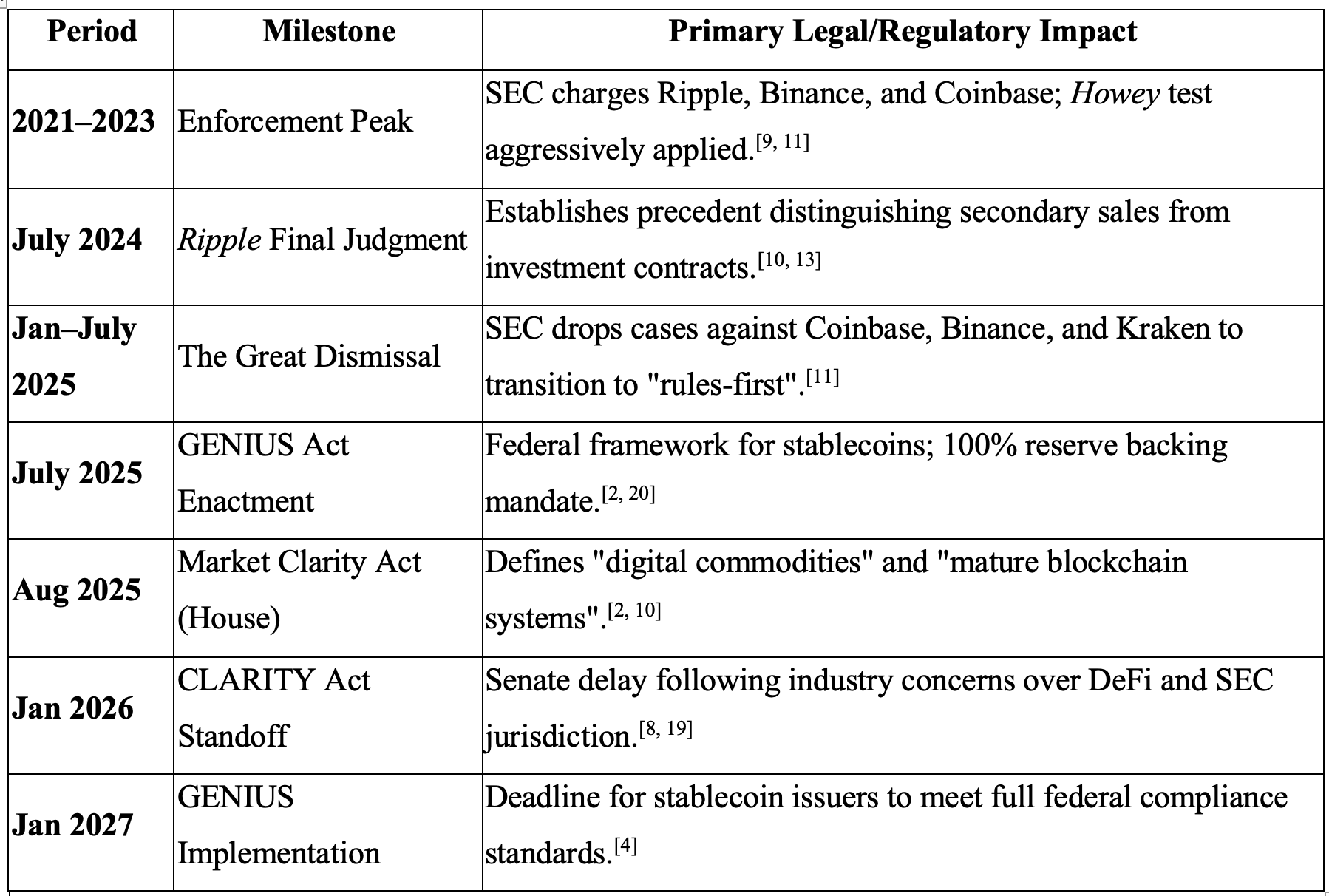
The trajectory of digital asset regulation in the United States over the last five years serves as the primary case study for the shift from “regulation by enforcement” to a “rules-first” posture.[1, 8] From 2021 to 2024, the Securities and Exchange Commission (SEC) pursued a litigious strategy, arguing that the 1946 Howey test was sufficient to classify the vast majority of digital assets as securities.[9, 10] This culminated in high-profile enforcement actions against Binance, Coinbase, and Kraken, which initially appeared to set the stage for a prolonged legal standoff.[11] However, the political shifts of 2025 led to a radical reorientation of federal policy.[1, 4]
The Reversal of the Litigious Posture and the Rise of “Project Crypto”
In early 2025, the SEC initiated a systematic withdrawal from active litigation against major crypto firms. On February 27, 2025, the agency filed a joint stipulation to dismiss its civil enforcement action against Coinbase, citing the “pending work of the Crypto Task Force”.[11] This was followed by the dismissal of the case against Binance Holdings Ltd. and founder Changpeng Zhao on May 29, 2025, despite a prior court ruling upholding the majority of the fraud allegations.[11] These dismissals were not an admission of legal error but a strategic pivot to facilitate “Project Crypto,” an SEC-wide initiative aimed at overhauling securities laws to enable financial markets to move on-chain.[4, 11] This new initiative includes the creation of a digital asset taxonomy and a package of exemptions designed to streamline capital formation for token issuers.[4, 12]
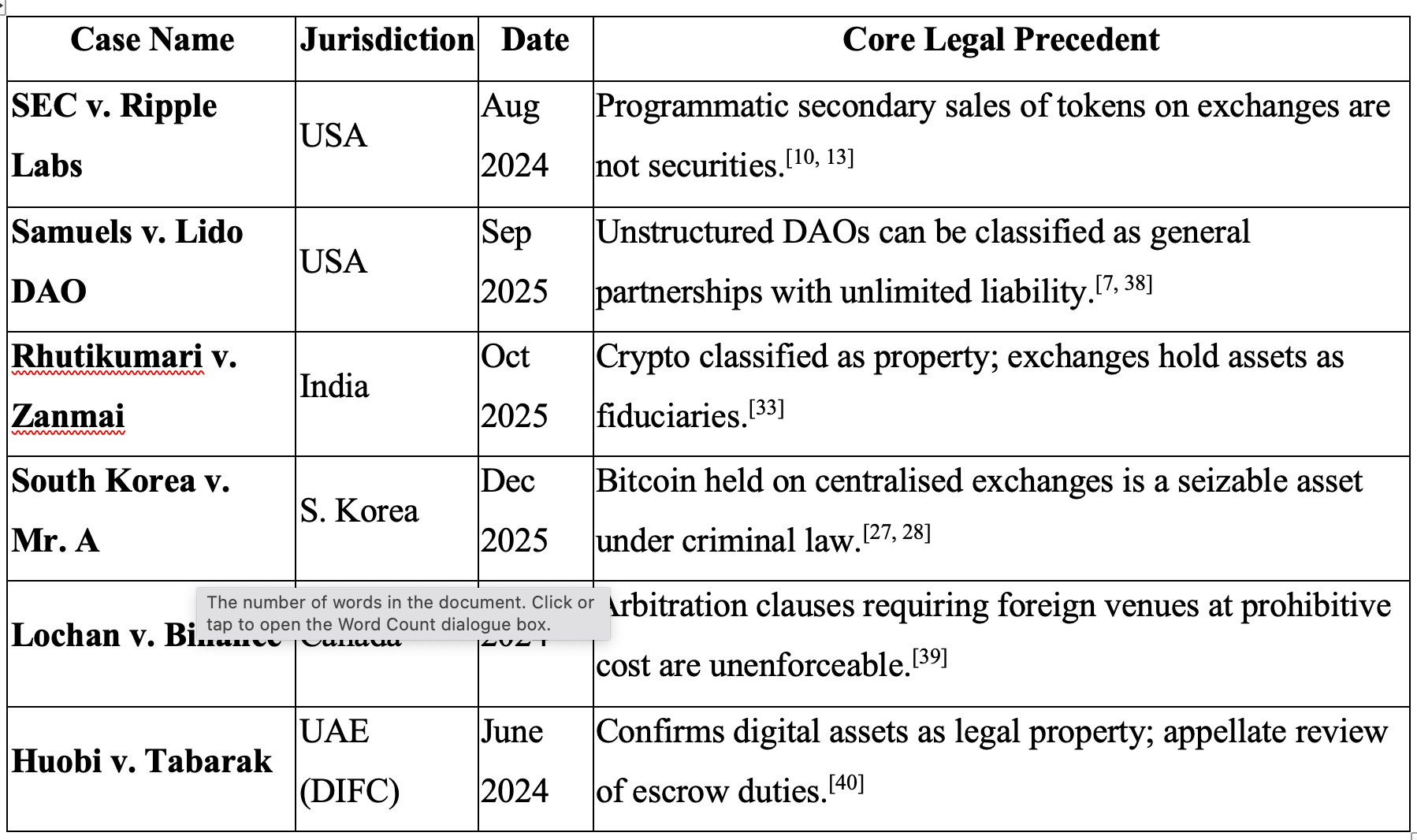
The judiciary’s role during this period remained pivotal. In the landmark SEC v. Ripple Labs case, the court distinguishing between institutional sales (securities) and programmatic secondary sales (non-securities) on August 7, 2024, provided the initial cracks in the SEC’s “everything is a security” narrative.[10, 13] By early 2026, the resolution of this conflict has removed the “regulatory discount” previously applied to XRP, which has since seen significant institutional adoption and the launch of spot ETFs in the U.S. market.[14, 15]
The Legislative Pillars: GENIUS and CLARITY Acts
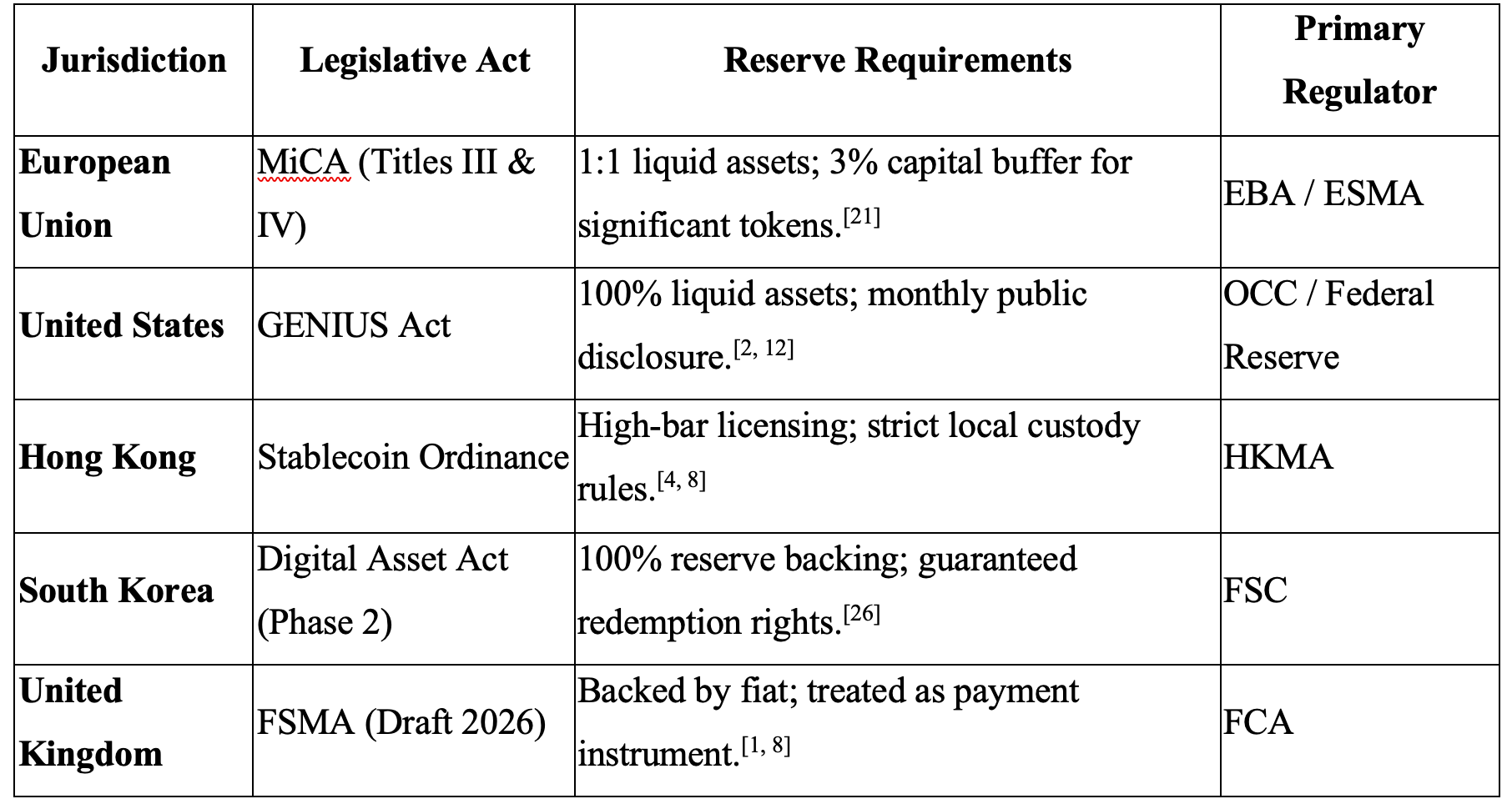
The transition to a rules-based regime was formalised through two major legislative achievements. The Global Economic Normalization and Institutional Utilization of Stablecoins (GENIUS) Act, passed in July 2025, created the first federal regulatory framework for payment stablecoins.[2, 8, 16] The Act mandates that issuers maintain 100% reserve backing in liquid assets and prohibits the payment of interest on stablecoins to prevent systemic banking risks.[2, 12] By early 2026, the industry is awaiting final implementing regulations from the Office of the Comptroller of the Currency (OCC), which will allow traditional financial institutions to issue stablecoins under federal supervision.[4, 12]
Following the GENIUS Act, the Digital Asset Market Clarity Act (CLARITY Act) was introduced to resolve the long-standing jurisdictional tussle between the SEC and the Commodity Futures Trading Commission (CFTC).[2, 10] The CLARITY Act draws a “bright line” between investment contracts and digital commodities, allowing assets that reach “blockchain maturity” to trade outside the securities framework.[10, 17] A critical “Immunity Clause” in the proposed legislation automatically classifies any asset that served as the basis for a U.S.-listed ETF by January 1, 2026, as a non-security.[15, 18]
However, as of mid-January 2026, the CLARITY Act is facing a delay in the Senate after Coinbase withdrew its support, citing concerns that revised language would expand SEC authority over DeFi protocols and restrict tokenised equities.[8, 19]
Table 1: United States Legislative and Regulatory Timeline (2021–2027)
The European Union: MiCA as a Global Benchmark for Unified Oversight
The European Union has positioned itself as the global leader in comprehensive crypto-asset governance through the Markets in Crypto-Assets (MiCA) Regulation, which entered into full effect on January 1, 2025.[1, 4, 21] MiCA replaced the previous patchwork of national AML-based regimes with a unified framework for the issuance, trading, and custody of digital assets across all 27 member states.[4, 8, 21]
The Mechanics of MiCA and the Grandfathering Period
The core innovation of MiCA is the “passporting” mechanism, which allows a Crypto-Asset Service Provider (CASP) authorised in one member state to operate throughout the entire bloc.[8, 21] However, the transition has not been without friction. A “grandfathering” period allows existing firms to continue operating under national rules until mid-2026, leading to significant divergence in how national authorities approach the new standards.[1, 4] For example, Spain and Austria have taken different paths in their rollout timelines, creating a “competition for clarity” as firms seek the most efficient regulatory environments.[20, 22]
MiCA’s impact is most visible in the stablecoin market. The regulation imposes strict requirements on Asset-Referenced Tokens (ARTs) and E-Money Tokens (EMTs), including the maintenance of liquid reserves at a 1:1 ratio.[21, 23] This has forced a rotation in the European market toward MiCA-compliant stablecoins, as CASPs are generally restricted from offering non-compliant assets.[4] Furthermore, the EU has paired MiCA with the Digital Operational Resilience Act (DORA), requiring crypto firms to demonstrate robust technical controls and recovery capacities for technological failures.[2, 20]
Fiscal Transparency and the DAC8 Directive
As the regulatory framework matures, the EU has turned its focus to fiscal oversight. The DAC8 directive, which mandates crypto-asset reporting across the bloc, takes effect on January 1, 2026.[24] This infrastructure requires platforms to share data on transactions and identifiable individuals with tax authorities, effectively closing the window for “invisible” crypto gains.[24] This move is complemented by Regulation 2023/1113, which extends the “Travel Rule” to all crypto transfers regardless of size, ensuring a level of transparency previously unseen in digital asset markets.[23, 25]
Table 2: Comparative Global Stablecoin Regulatory Frameworks (Early 2026)
The United Kingdom: Pursuing “Technology Positivity” and Sovereign Innovation
The United Kingdom has spent the last five years refining a regulatory posture that emphasises “technology positivity” and legal clarity over outright prohibition.[5] A seminal development was the Property (Digital Assets etc) Act 2025, which definitively classified digital assets as property under English law, providing the legal foundation for complex arrangements in custody and inheritance.[5]
Evolution of English Common Law
The evolution of English law in recognising cryptocurrency as property represents a remarkable journey of judicial adaptation to technological innovation. Prior to 2019, the legal status of digital assets remained uncertain within the traditional common law framework, which historically categorised property into two distinct forms: things in possession (tangible objects that can be physically possessed) and things in action (intangible rights enforceable through legal action, such as debts or shares). Cryptocurrencies presented a conceptual challenge because they possessed characteristics of both categories yet fit neatly into neither. The breakthrough came with the UK Jurisdiction Taskforce’s November 2019 Legal Statement on Cryptoassets and Smart Contracts, which concluded that crypto-tokens could constitute property under English law despite their intangible and decentralised nature. This analysis was subsequently endorsed by the judiciary in cases such as AA v Persons Unknown [2019] EWHC 3556 (Comm), where the High Court granted a proprietary injunction over Bitcoin, and Ion Science Ltd v Persons Unknown [2020] EWHC 3106 (Comm), which further affirmed that crypto assets possess the essential characteristics of property: definiteness, identifiability, and third-party enforceability.
Legislative Codification
The consensus established through case law culminated in the enactment of the Property (Digital Assets etc) Act 2025, which provided statutory confirmation that digital assets constitute a distinct third category of personal property under English law, alongside things in possession and things in action. This legislative intervention resolved residual uncertainties and provided a solid foundation for complex commercial arrangements involving digital assets, including custody agreements, security interests, trusts, and inheritance. The Act’s significance extends beyond mere classification; it establishes clear rules for proprietary claims, tracing, and priority disputes in insolvency scenarios. The recognition of cryptocurrency as property has profound implications: it enables digital assets to be held on trust, subjected to proprietary remedies (such as freezing injunctions and proprietary claims in tracing), and treated consistently with other forms of wealth for purposes of inheritance, divorce settlements, and enforcement of judgments. This clarity has positioned England and Wales as a leading jurisdiction for crypto-related litigation and dispute resolution, with the English courts developing a sophisticated body of precedent addressing novel issues such as the attribution of ownership in self-custodied versus exchange-held tokens, the applicability of equitable principles to code-based protocols, and the intersection of private keys with traditional concepts of possession and control.
English Courts’ Capability: The Craig Wright Fraud Case
The English High Court’s comprehensive debunking of Craig Wright’s claim to be Bitcoin creator Satoshi Nakamoto in COPA v. Wright (2024) demonstrated the sophistication of English courts in handling technologically complex fraud. Mr. Justice Mellor found Wright’s evidence “overwhelmingly” fabricated, concluding he had engaged in forgery on a grand scale and issuing a worldwide anti-suit injunction protecting open-source developers from predatory litigation. Wright’s subsequent contempt of court conviction in December 2024 - for violating the injunction by filing a £900 billion claim against BTC Core developers, resulted in a suspended prison sentence and a General Civil Restraint Order preventing new claims until March 2028.
The UK Cryptoasset Perimeter and DIGIT
By early 2026, the Financial Conduct Authority (FCA) is implementing a comprehensive framework for trading, custody, and staking, with the full regime expected to be operational by October 2027.[1, 5] A key focus for the UK is the modernisation of financial infrastructure. The government’s sovereign debt pilot, known as DIGIT, involves the issuance of fully on-chain sovereign debt, demonstrating the state’s commitment to integrating blockchain into core fiscal operations.[5]
The UK is also grappling with the “cash leg” challenge - the transformation of fiat currency into digital value for settlement. To address this, the Bank of England has renewed its real-time gross settlement service (RT2) to better interface with digital asset rails.[5] This initiative aims to reduce the fragmentation of “walled gardens” by creating interoperable standards between traditional and decentralized finance.[5]
The United Arab Emirates: Middle Eastern Pioneer in Digital Asset Jurisprudence
The Dual Financial Free Zone Model
The United Arab Emirates has emerged as the most sophisticated digital asset jurisdiction in the Middle East and North Africa region, establishing a comprehensive legal framework through its dual financial free zone architecture. The Dubai International Financial Centre (DIFC) and the Abu Dhabi Global Market (ADGM) both operate under common law principles derived from English law, providing familiar legal certainty to international market participants while maintaining regulatory autonomy from mainland UAE law. The DIFC’s landmark decision in Huobi Global Ltd v Tabarak Investment Ltd [2024] DIFC CA 002 represents a watershed moment in Middle Eastern crypto jurisprudence. The DIFC Court of Appeal unequivocally confirmed that digital assets constitute “property” under DIFC law, capable of being held on trust and subject to proprietary remedies, explicitly aligning with English common law principles established in AA v Persons Unknown. This judicial recognition preceded and influenced the UK’s Property (Digital Assets etc) Act 2025, demonstrating the UAE’s role as a legal innovator rather than mere follower. The court’s detailed analysis of crypto asset custody arrangements, escrow duties, and the distinction between legal and beneficial ownership in digital asset transactions has established DIFC as a preferred jurisdiction for high-value crypto disputes, with parties worldwide selecting DIFC jurisdiction clauses for their commercial agreements.
Comprehensive Regulatory Infrastructure
Beyond judicial recognition, the UAE has implemented the world’s most comprehensive and graduated regulatory framework for virtual asset service providers. In mainland Dubai, the Virtual Assets Regulatory Authority (VARA), established in 2022, has created an exhaustive licensing regime covering exchanges, custody providers, advisory services, and even crypto-to-crypto platforms that previously operated in regulatory grey zones globally. VARA’s regulations mandate operational licenses for all virtual asset activities conducted in or from Dubai, with detailed requirements covering cybersecurity, AML/CFT compliance, consumer protection, and market conduct. Simultaneously, the ADGM’s Financial Services Regulatory Authority (FSRA) operates a parallel regime focused on institutional-grade services, including tokenised securities, crypto asset management, and blockchain-based clearing and settlement infrastructure. By early 2026, the UAE hosts over 1,500 licensed crypto entities, ranging from major international exchanges establishing regional headquarters to innovative DeFi protocols seeking regulatory clarity. The UAE’s strategic positioning, combining legal certainty derived from common law traditions, sophisticated judicial infrastructure, favourable tax treatment (no corporate or income tax in free zones), and proximity to major Asian and European markets, has established the Emirates as the preeminent jurisdiction for compliant crypto innovation. This is evidenced by the migration of major crypto firms from Singapore and Switzerland, the establishment of dedicated crypto venture capital funds in ADGM, and the UAE Central Bank’s proactive work on Central Bank Digital Currency (CBDC) integration with commercial stablecoin frameworks, positioning the nation at the forefront of public-private digital currency convergence.
Asia-Pacific: Proactive Hubs and the Seizure of Digital Wealth
The Asia-Pacific region has long been home to early movers in the crypto space, but 2025 and 2026 have seen a broad acceleration of policy momentum as jurisdictions seek to balance innovation with financial stability.[4]
Hong Kong: From Sandbox to Ordinance
Hong Kong’s enactment of the Stablecoin Ordinance in August 2025 signalled its return as a premier digital asset hub.[4] The ordinance was refined through a regulatory sandbox where the Hong Kong Monetary Authority (HKMA) tested reserve and capital requirements before the full rollout.[8] By early 2026, Hong Kong is proposing new rules for virtual asset custody and dealing, aiming to enable local platforms to access global liquidity pools while maintaining strict oversight of client asset segregation.[4]
Singapore: Institutional Maturity and FATF Compliance
Singapore has shifted its focus from retail trading toward institutional adoption and AML/CFT effectiveness.[4] In 2025, the Monetary Authority of Singapore (MAS) moved from pilots to playbooks, publishing an operational framework for tokenised funds under “Project Guardian”.[4] Simultaneously, Singapore became one of the first countries to undergo a fifth round of FATF Mutual Evaluations, specifically assessing the enforcement of the Travel Rule and the supervision of Digital Token Service Providers.[4]
South Korea: Landmark Jurisprudence on Asset Seizure
A defining moment in South Korean jurisprudence occurred on December 11, 2025, when the Supreme Court ruled that Bitcoin held on centralised exchanges could be legally seized by law enforcement.[27, 28] The court rejected the argument that Bitcoin is not a physical object, stating it qualifies as “electronic information with independent manageability, tradability, and economic value”.[26, 27] This ruling building on earlier precedents recognising Bitcoin as property in divorce and criminal cases, has led to a surge in investigative warrants and the establishment of a “Joint Response Unit” to combat stock-price-style manipulation in the crypto markets.[27, 29] South Korea also moved forward with “Phase 2” digital asset legislation, which requires stablecoin issuers to maintain 100% reserve backing to prevent a recurrence of the 2022 Terra-Luna collapse.[26]
Criminal Accountability: The Do Kwon Prosecution
The criminal prosecution of Do Kwon, co-founder of Terraform Labs, represents the most significant criminal accountability case arising from the 2022 Terra-Luna algorithmic stablecoin collapse that wiped out $40 billion in value. Following his March 2023 arrest in Montenegro using falsified travel documents, Kwon was extradited to the United States in late 2024 to face fraud and market manipulation charges for misleading investors about Terra’s stability mechanisms while allegedly orchestrating the movement of billions through shell companies. The case establishes that algorithmic stablecoin failures triggering systemic contagion, Terra’s collapse precipitated the subsequent failures of Three Arrows Capital, Celsius, and Voyager, carry criminal, not merely civil, liability for founders who misrepresent fundamental protocol risks.
The Global South: Property Rights, Tax Realities, and Policy Reversals
In the Global South, the last five years have been a period of intense experimentation and often punitive regulation as governments attempt to manage capital flight and illicit finance.[30, 31]
India: The Madras Property Ruling and the Tax Burden
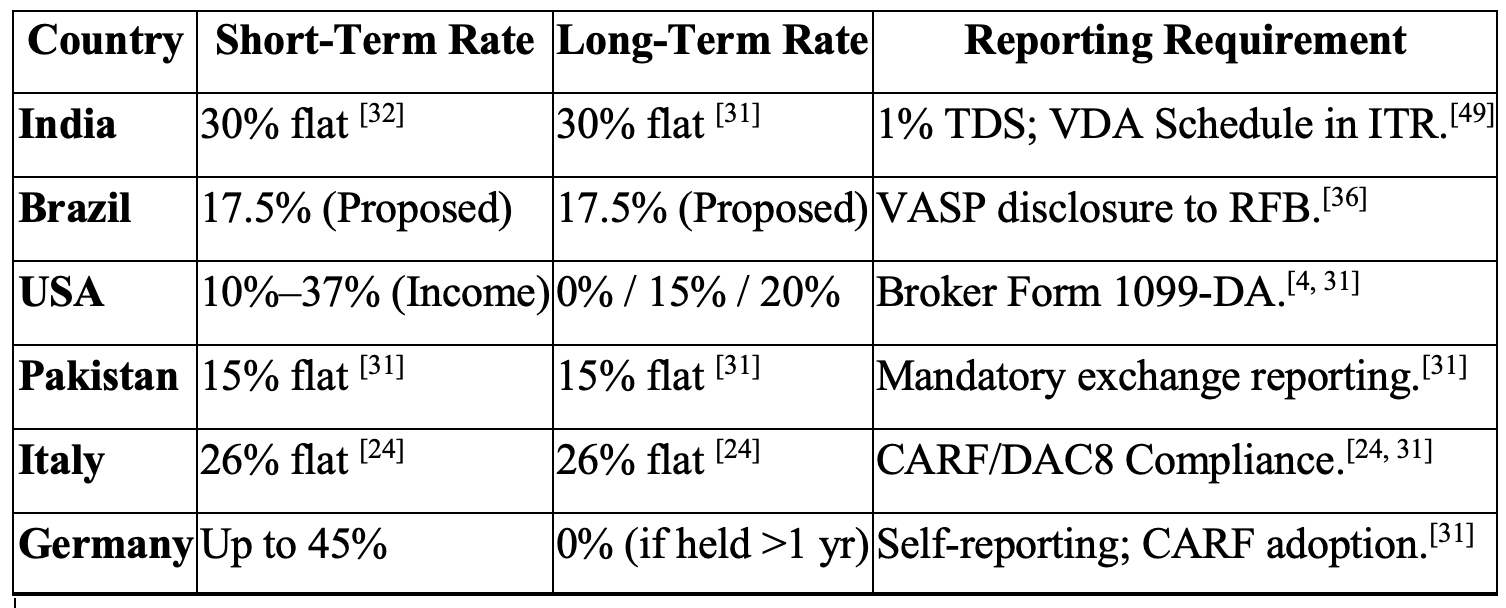
India’s relationship with crypto is characterised by high adoption and equally high taxation. As of early 2026, India imposes a flat 30% tax on crypto profits and a 1% TDS on all transactions over ₹10,000.[31, 32] While the government remains sceptical of crypto as legal tender, the judiciary has stepped in to protect investors.[32, 33] On October 25, 2025, the Madras High Court delivered a landmark judgment in Rhutikumari v. Zanmai Labs Pvt. Ltd., classifying cryptocurrency as property and ruling that exchanges act as fiduciaries.[33] This case, triggered by the 2024 WazirX cyberattack, established that exchanges cannot unilaterally socialise losses by reducing user balances of unaffected tokens, as those tokens represent distinct property rights held in trust.[33]
El Salvador: The Reversal of the Bitcoin Experiment
El Salvador, which became the first country to adopt Bitcoin as legal tender in 2021, has faced a dramatic policy reversal by early 2026.[34, 35] Mounting economic pressure and protests led to a budget review that prompted the suspension of Bitcoin acceptance in an official capacity.[35] While the 2021 Bitcoin Law initially drew global attention, the experiment failed to become the primary engine of the economy, with retail usage remaining low and international lenders pressuring the government for fiscal normalcy.[30] By January 2026, Salvadoran authorities have moved toward a more disciplined digital-asset regime, focusing on the regulation of payment service providers rather than sovereign adoption.[30, 34]
Brazil and South Africa: Structural Definitions
Brazil finalised its regulatory regime for Virtual Asset Service Providers (VASPs) in 2025, with the Central Bank of Brazil (BCB) acting as the primary supervisor.[20, 36] The country has integrated VASPs into its financial intelligence unit (COAF) and proposed a flat 17.5% tax on crypto gains to harmonize the sector with traditional finance.[36]
In South Africa, the legal status of crypto remains a point of contention. The High Court in Standard Bank v SARB ruled that Bitcoin is neither “currency” nor “capital” under 1961 Exchange Control Regulations, citing a “regulatory lacuna”.[37] The South African Reserve Bank (SARB) has appealed this to the Supreme Court of Appeal (SCA), with a hearing scheduled for 2026. This case will determine if a 1961 text can be judicially expanded to cover digital assets or if Parliament must amend the law manually, as it did for intellectual property in 2012.[37]
Table 3: Landmark Global Cryptocurrency Jurisprudence (2023–2025)
The Evolution of Corporate and Protocol Liability: DAOs and DeFi
One of the most profound shifts entering 2026 is the legal dismantling of the “entityless” nature of Decentralized Autonomous Organisations (DAOs). For years, the industry operated under the assumption that decentralised protocols could function in a legal void, but the last 24 months of jurisprudence have largely rejected this view.[7, 41]
Unincorporated Partnerships and Joint Liability
In several jurisdictions, most notably the United States, courts have ruled that DAOs without a formal legal structure are general partnerships.[41, 42] This imposes “joint and several” liability on the group, meaning that any individual member - particularly wealthy investment firms - can be sued for the entirety of the DAO’s obligations.[7, 41] The Samuels v. Lido DAO ruling in September 2025 served as a landmark example, where the court denied a motion to compel arbitration and highlighted that active participation in governance can expose members to personal liability.[7, 38]
Developer Liability and the Tornado Cash Precedent
In United States v. Roman Storm, the prosecution of Tornado Cash’s co-founder represents the most significant test of developer liability in the DeFi era. In August 2025, a federal jury convicted Storm of conspiracy to operate an unlicensed money-transmitting business after prosecutors proved the platform laundered over $1 billion for the North Korean Lazarus Group, though the jury deadlocked on more severe money laundering and sanctions charges. Storm’s defence maintains that building privacy-preserving open-source code is protected First Amendment speech, with the conviction now under judicial review and fuelling new legislative efforts such as the Blockchain Regulatory Certainty Act introduced in January 2026.
The Rise of the “Legal Wrapper”
By early 2026, the trend has shifted toward “wrapping” DAOs in corporate structures to shield participants. Jurisdictions like Utah and Wyoming in the U.S., as well as the Marshall Islands and the Cayman Islands, have enacted DAO-specific legislation.[42, 43] The Utah DAO Act, which took effect in 2024, grants DAOs legal personhood and limited liability protection.[42] This allows DAOs to obtain tax IDs, enter contracts, and file returns, effectively transitioning them from “autonomous code” to “legally recognised entities”.[42, 43] The Harmony Framework, introduced in February 2025, has emerged as a modular architecture that helps DAOs isolate risks by using multiple legal wrappers for different operational layers, such as treasury management and project development.[7]
The Aftermath of Systemic Collapses: Insolvency and Recovery (2022–2026)
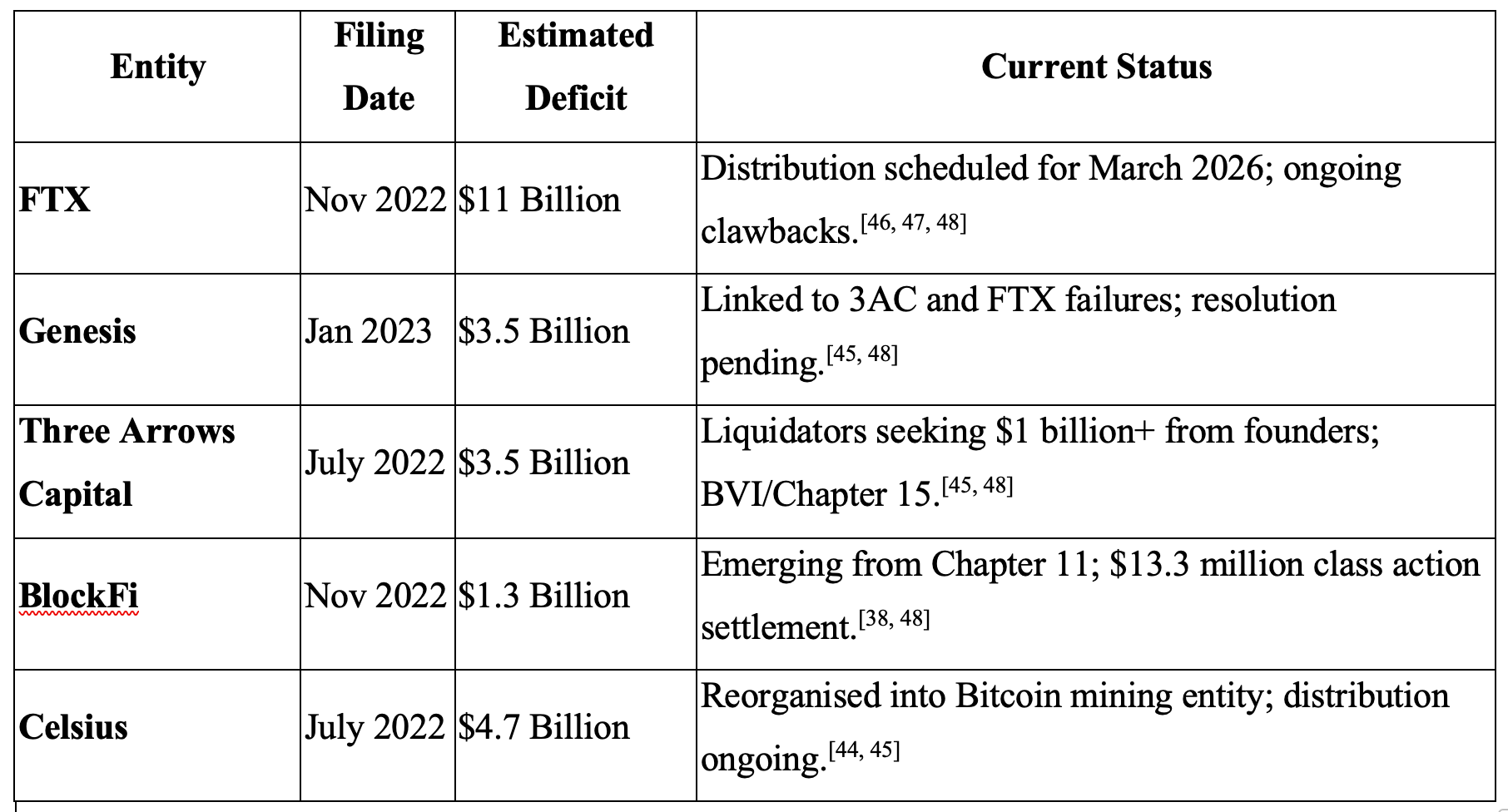
The period between 2022 and 2023 was the “era of crypto bankruptcies,” but 2025 and 2026 have been defined by the gruelling process of asset recovery and the setting of insolvency precedents.[44, 45]
The FTX Restructuring and “Clawback” Wars
The bankruptcy of FTX remains the most significant case in crypto history. By January 2026, the estate has moved toward a distribution plan that aims to repay creditors by March 31, 2026.[46] The recovery has been aided by the appreciation of the estate’s remaining assets, but hindered by complex legal battles.[46, 47] A primary dispute involves the FTX estate’s lawsuit against Genesis Digital Assets, seeking to recover nearly $1 billion in pre-collapse transfers alleged to be fraudulent or unjust.[46]
These proceedings are defining how property law applies to commingled exchange funds. While U.S. courts in the Celsius case determined that ownership was a matter of contract law (favouring the estate), other jurisdictions, such as Italy in the Bitgrail case, have reached similar conclusions, finding that deposited assets become part of the debtor’s insolvency estate.[44]
Table 4: Status of Major Cryptocurrency Insolvency Proceedings (January 2026)
Financial Crime and the New Enforcement Frontier
As regulatory frameworks have solidified, the focus of law enforcement has shifted from pursuing technical violations to dismantling transnational crime networks.[4]
Asset Recovery and International Cooperation
The FATF’s 2025 asset recovery guidance has become the international standard, explicitly encouraging the use of blockchain analytics and public-private partnerships.[4] On the operational front, the U.S. launched the “Scam Center Strike Force” in 2025, which has undertaken unprecedented seizures to dismantle fraud networks.[4] In Southeast Asia, the shutdown of the “Tudou Guarantee” marketplace on Telegram in January 2026 - following a $12 billion run - marks a major victory against the scam economy.[8]
The Travel Rule and the “Sunrise Issue”
The implementation of the FATF Travel Rule remains one of the most significant operational challenges for the industry. While 99 jurisdictions are in various stages of implementation by 2025, the “Sunrise Issue” - where one jurisdiction enforces the rule while another does not - creates significant friction for global transactions.[4, 8] Regulators are increasingly focusing on “gatekeeper” obligations, imposing penalties on financial institutions and tech platforms that fail to protect consumers against crypto-investment fraud.[4]
Institutional Integration and the “On-Chain” Financial System
By early 2026, the divide between Traditional Finance (TradFi) and Decentralised Finance (DeFi) is blurring. Banks have moved from the sidelines into custody, stablecoin issuance, and the tokenisation of real-world assets (RWA).[4, 6]
Tokenisation and the “Multi-Moneyverse”
The tokenisation of funds, debt instruments, and commodities has gained massive traction. AUM of tokenised money market funds holding U.S. Treasuries rose above $8 billion by December 2025.[4] This trend is supported by regulatory shifts like the EU’s DLT Pilot Regime and the U.S. SEC’s no-action letter allowing the Depository Trust Company (DTC) to facilitate securities tokenisation.[4] However, the industry still faces unresolved legal questions regarding how commercial property laws apply to tokenised share registers and how tokens are treated as collateral.[6, 12]
Table 5: Global Crypto Taxation Comparative Analysis (FY 2025–2026)
Strategic Synthesis and Early 2026 Outlook
The entry into 2026 marks the beginning of the “operational phase” of crypto regulation. The threshold questions of legitimacy that dominated the 2021–2024 period have been largely resolved through high-level legislative acts such as MiCA and the GENIUS Act.[2, 50] For serious market participants, the risk has evolved from regulatory overreach to regulatory misalignment - the danger of building infrastructure that does not fit into the emerging global standards for custody, reserve management, and operational resilience.[51]
The industry’s maturity is further evidenced by the shift in tone from regulators like the FDIC and the OCC, which now emphasise “safe-and-sound” risk management over outright prohibitions.[4, 10] However, the volatility of late 2025, which saw Bitcoin crash from $126,000 to below $20,000 following excessive leverage, serves as a reminder that the industry remains susceptible to speculative cycles.[52] As 2026 progresses, the primary focus for practitioners and policymakers will be the refinement of these nascent rules, the resolution of ongoing “clawback” litigations, and the quest for a truly interoperable global digital financial system.[3, 5, 50]
1. PwC Global Crypto Regulation Report 2025, https://legal.pwc.de/content/services/global-crypto-regulation-report/pwc-global-crypto-regulation-report-2025.pdf
2. Top 5 crypto regulatory trends 2025 - CoinCover, https://www.coincover.com/blog/top-5-crypto-regulatory-trends-2025-coincover
3. What to expect for digital assets in 2026 - The World Economic Forum, https://www.weforum.org/stories/2026/01/digital-economy-inflection-point-what-to-expect-for-digital-assets-in-2026/
4. 2025 Crypto Regulatory Round-Up: What Changed and What’s Ahead - Chainalysis, https://www.chainalysis.com/blog/2025-crypto-regulatory-round-up/
5. Digital Assets in 2026: What to Watch - Ashurst, https://www.ashurst.com/en/insights/digital-assets-in-2026-what-to-watch/
6. Digital Assets in 2026: From early days to regulated scale - Walkers Global, https://www.walkersglobal.com/Insights/2025/12/Digital-Assets-in-2026
7. DAO 3.0: Ultimate Legal Structuring for DAOs in 2025 and Beyond - aurum. law, https://aurum.law/newsroom/DAO-3-0-ultimate-dao-legal-structuring-in-2025-and-beyond
8. How crypto regulation changed in 2025: a global review - Elliptic, https://www.elliptic.co/blog/how-crypto-regulation-changed-in-2025
9. Crypto in the Courts: Five Cases Reshaping Digital Asset Regulation in 2025, https://katten.com/crypto-in-the-courts-five-cases-reshaping-digital-asset-regulation-in-2025
10. Blockchain & Cryptocurrency Laws & Regulations 2026 | USA - Global Legal Insights, https://www.globallegalinsights.com/practice-areas/blockchain-cryptocurrency-laws-and-regulations/usa/
11. January 15, 2026 Mr. Paul S. Atkins Chairman Securities and ..., https://democrats-financialservices.house.gov/uploadedfiles/01.14.2026_ltr_sec_rfcryptoe.pdf
12. With Supportive New Regulations, Digital Assets Are Likely to Proliferate in 2026 | Skadden, Arps, Slate, Meagher & Flom LLP, https://www.skadden.com/insights/publications/2026/2026-insights/sector-spotlights/with-supportive-new-regulations-digital-assets-are-likely-to-proliferate-in-2026
13. Crypto Class Action Key Decisions and Trends in 2025 - Duane Morris, https://www.duanemorris.com/articles/crypto_class_action_key_decisions_trends_2025_0925.html
14. Can XRP Continue Its Rally in Early 2026? Key Factors to Watch | DrZayed on Binance Square, https://www.binance.com/en/square/post/34951857421706
15. XRP gains legal immunity and enters the top three | BeInCrypto PL on Binance Square, https://www.binance.com/en-AE/square/post/35214263277850
16. Blockchain & Cryptocurrency Laws and Regulations 2026 (Stablecoin Use Cases and Regulations) | Skadden, Arps, Slate, Meagher & Flom LLP, https://www.skadden.com/insights/publications/2025/10/blockchain-cryptocurrency-laws
17. Text - H.R.3633 - 119th Congress (2025-2026): Digital Asset Market Clarity Act of 2025, https://www.congress.gov/bill/119th-congress/house-bill/3633/text
18. Latest #sec News, Opinions and Feed Today | Binance Square, https://www.binance.com/en-IN/square/hashtag/sec
19. Coinbase Pulls Support From CLARITY Act as U.S. Crypto Market Reform Enters Critical Phase - FinTech Weekly, https://www.fintechweekly.com/news/coinbase-clarity-act-withdrawal-us-crypto-market-reform
20. Global Crypto Policy Review Outlook 2025/26 Report - TRM Labs, https://www.trmlabs.com/reports-and-whitepapers/global-crypto-policy-review-outlook-2025-26
21. European crypto-assets regulation (MiCA) - EUR-Lex, https://eur-lex.europa.eu/EN/legal-content/summary/european-crypto-assets-regulation-mica.html
22. Markets in Crypto-Assets (MiCA) Regulation Tracker - Latham & Watkins LLP, https://www.lw.com/en/markets-in-crypto-assets-regulation-tracker
23. New Rules for Crypto-Assets in the EU - eucrim, https://eucrim.eu/news/new-rules-for-crypto-assets-in-the-eu/
24. Global Crypto Tax Report 2025 - Coincub, https://coincub.com/ranking/global-crypto-tax-report-2025/
25. EU passes landmark crypto regulation, MiCA, in lock step after cementing decried, dreaded virtual value AML ‘travel rule’ - ACFCS, https://www.acfcs.org/eu-passes-landmark-crypto-regulation
26. South Korea’s Top Court Rules Exchange-Held Bitcoin Can Be Seized - Brave New Coin, https://bravenewcoin.com/insights/south-koreas-top-court-rules-exchange-held-bitcoin-can-be-seized
27. South Korea Supreme Court Declares Bitcoin a Seizable Asset Marking a New Era of Crypto Accountability - Spectrum Search, https://spectrum-search.com/insights/south-korea-supreme-court-declares-bitcoin-a-seizable-asset-marking-a-new-era-of-crypto-accountability
28. South Korea Supreme Court Confirms Bitcoin Held on Exchanges Is Seizable Under Law, https://es.tradingview.com/news/coinpedia:d9cd5407e094b:0-south-korea-supreme-court-confirms-bitcoin-held-on-exchanges-is-seizable-under-law/
29. New Initiatives to Eliminate Unfair Trade Practices in Capital Market: Announcement of Action Plans and Follow-Up Steps - Kim & Chang, https://www.kimchang.com/en/insights/detail.kc?sch_section=4&idx=33198
30. Has Latin America Outpaced the US on Crypto Oversight? El Salvador Makes the Case., https://www.corporatecomplianceinsights.com/latin-america-outpaced-us-crypto-oversight/
31. Crypto Taxation Across Borders: A Comparative Mapping of Global Regimes - CRF India, https://www.crfindia.org/publications/issue-brief/crypto-taxation-across-borders-a-comparative-mapping-of-global-regimes
32. Cryptocurrency Law in India: Current Legal Status and Regulatory Landscape (2025) - Blog, https://finlaw.in/blog/cryptocurrency-law-in-india-current-legal-status-and-regulatory-landscape-2025
33. Cryptocurrency as Property: Madras High Court’s Ruling and the Indian Regulatory Framework - IndiaCorpLaw, https://indiacorplaw.in/2026/01/10/cryptocurrency-as-property-madras-high-courts-ruling-and-the-indian-regulatory-framework/
34. BC.Game and Cryptocurrency Adoption in El Salvador: A New Chapter for Digital Betting - weareiowa.com, https://www.weareiowa.com/article/news/local/plea-agreement-reached-in-des-moines-murder-trial/524-3069d9d4-6f9b-4039-b884-1d2146bd744f?y-news-29155265-2026-01-18-bc-game-and-cryptocurrency-adoption-in-el-salvador-new-chapter-digital-betting
35. CryptoWild Faces Challenges as El Salvador Reverses Cryptocurrency Policies - weareiowa.com, https://www.weareiowa.com/article/news/local/plea-agreement-reached-in-des-moines-murder-trial/524-3069d9d4-6f9b-4039-b884-1d2146bd744f?y-news-29285050-2026-01-19-crypto-wild-faces-challenges-as-el-salvador-reverses-cryptocurrency-policies
36. Blockchain & Cryptocurrency Laws & Regulations 2026 | Brazil - Global Legal Insights, https://www.globallegalinsights.com/practice-areas/blockchain-cryptocurrency-laws-and-regulations/brazil/
37. Bitcoin vs 1961: South Africa’s Crypto Legal Showdown, https://www.webberwentzel.com/News/Pages/bitcoin-vs-1961-why-south-africas-crypto-crackdown-just-hit-a-legal-wall.aspx
38. Key Crypto Class Action Trends And Rulings In ... - Duane Morris LLP, https://www.duanemorris.com/articles/key_crypto_class_action_trends_rulings_2025_1225.html
39. Appeal Court Found Crypto Trading Platform’s Arbitration Clause Unenforceable, https://millertiterle.com/appeal-court-found-crypto-trading-platforms-arbitration-clause-unenforceable/
40. Huobi v Tabarak: DIFC Court of Appeal delivers landmark judgment ..., https://www.hoganlovells.com/en/publications/huobi-v-tabarak-landmark-difc-court-of-appeal-decision-concerning-cryptocurrency-and-digital-assets
41. The Legal Personhood of Decentralized Systems - Blockhead, https://www.blockhead.co/2025/06/16/the-legal-personhood-of-decentralized-systems/
42. Utah Grants DAO’s Corporate Identity, Personhood Status - Gamma Law, https://gammalaw.com/utah-grants-daos-corporate-identity-personhood-status/
43. Incorporating a DAO: Legal and Regulatory Insights - The Global Citizen, https://globalcitizen.world/incorporating-a-dao-legal-and-regulatory-insights/
44. Crypto Failures: Contract, Property and Regulatory Law - Oxford Law Blogs, https://blogs.law.ox.ac.uk/oblb/blog-post/2024/03/crypto-failures-contract-property-and-regulatory-law
45. Novel Issues in the Crypto Bankruptcy Cluster, https://bankruptcyroundtable.law.harvard.edu/2025/02/04/novel-issues-in-the-crypto-bankruptcy-cluster/
46. WinTrillions Reports Progress in Crypto Bankruptcy Proceedings Amid Legal Battles - weareiowa.com, https://www.weareiowa.com/article/news/local/plea-agreement-reached-in-des-moines-murder-trial/524-3069d9d4-6f9b-4039-b884-1d2146bd744f?y-news-27550428-2026-01-14-wintrillions-advances-in-crypto-bankruptcy-legal-battles
47. FTX Crypto Exchange Collapse: Causes, Consequences, and Lessons - Investopedia, https://www.investopedia.com/what-went-wrong-with-ftx-6828447
48. Crypto Bankruptcies 2025: Top Crypto Exchange Implosions - Milk Road, https://milkroad.com/bankruptcies/
49. Complete Guide to Crypto Taxation in India: 2025-2026 Strategies, Compliance, and Blockchain Solutions - Vegavid Technology, https://vegavid.com/blog/crypto-taxation-guide-india
50. Crypto’s Rules Are Here. 2026 Will Be About Making Them Work - Bloomberg Law News, https://news.bloomberglaw.com/legal-exchange-insights-and-commentary/cryptos-rules-are-here-2026-will-be-about-making-them-work
51. How 2025 Transformed Digital Assets: What Leaders Need to Know for 2026, https://www.gfrlaw.com/what-we-do/insights/how-2025-transformed-digital-assets-what-leaders-need-know-2026
52. Crypto soared in 2025 — and then crashed. Now what? - WABE, https://www.wabe.org/crypto-soared-in-2025-and-then-crashed-now-what-2/